
The Fieldstone House
Before it was a wall, it was a field — every stone in it pulled out of the ground by someone trying to grow something.
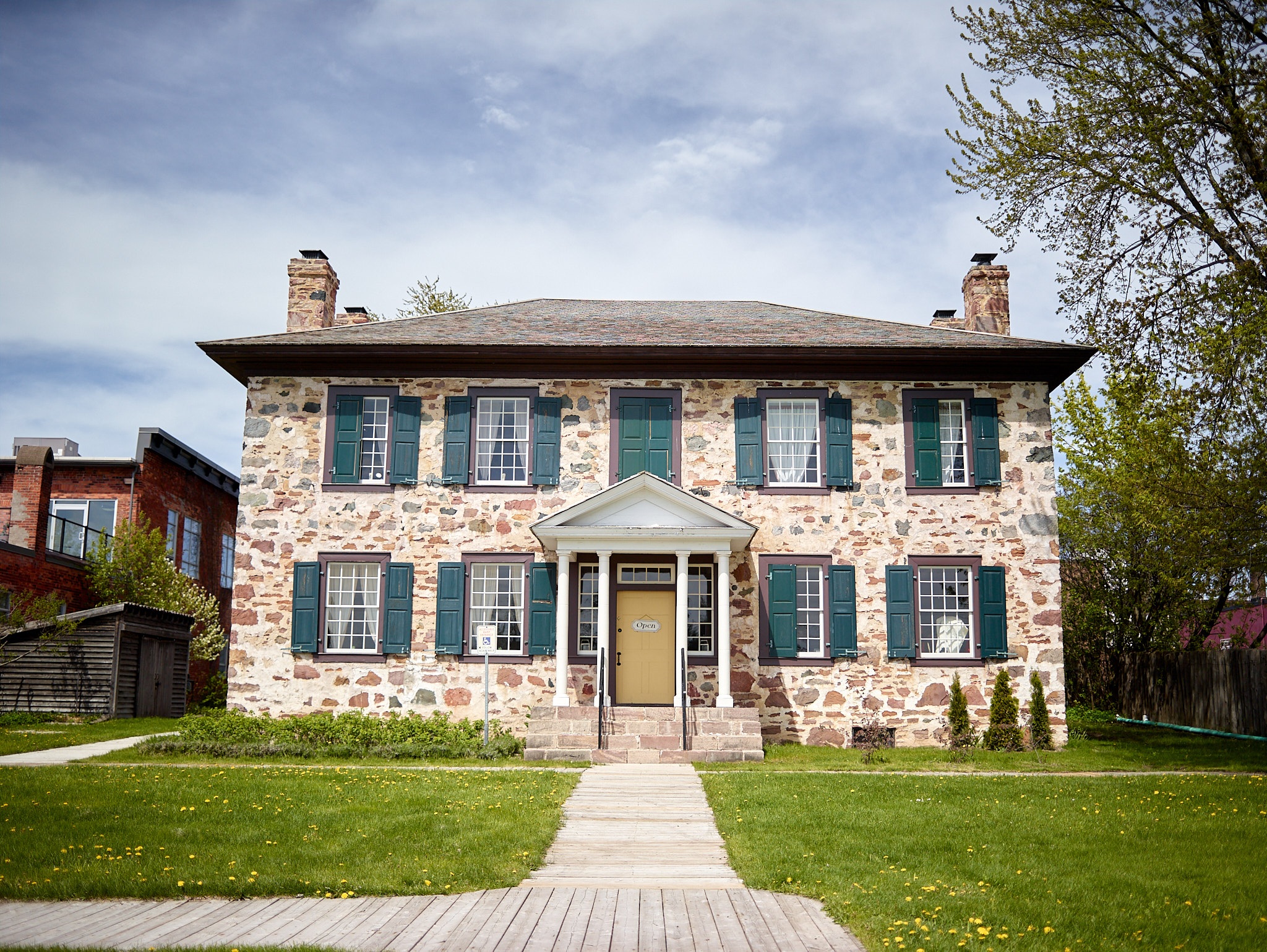
You can tell a fieldstone house from a quarried one at a glance. The stones aren’t cut to match. They’re whatever the plough turned up — round ones, flat ones, a few the size of a loaf of bread, fitted together like a puzzle nobody solved twice the same way. Up around Mono and Mulmur, where the till left behind more rock than topsoil in places, clearing a field and building a house were often the same job. What came out of the ground went into the walls.
That’s the part people don’t expect until they’re standing in one on a July afternoon like this: the walls are cool. Not air-conditioned-cool — a different, slower kind, the kind that comes from two feet of stone holding its own temperature no matter what the day outside is doing. Stand in a doorway and you can feel the wall’s thickness in the shade it throws, in how far back the window sits, in the little bench of a sill wide enough to set a bowl of peas on while you shell them.
These houses were never showy. A good fieldstone farmhouse tends to be modest in scale and unshakeable in construction — one that’s survived a hundred and fifty winters without complaint doesn’t feel the need to prove anything to you. What they offer instead is a kind of permanence you can lean on, literally, and a masonry story that a stucco bungalow simply doesn’t have.
There’s usually a lilac gone leggy by the door, planted by whoever cleared the field, still blooming a hundred years later whether anyone’s asked it to or not. And a view that hasn’t changed either — the same rise of land the original owner stood on deciding where the door should face.
IMAGE NOTE: The Ermatinger Old Stone House is one of the oldest stone buildings northwest of Toronto. Charles Ermatinger and his wife Mananowe (Charlotte) ran their home and business here during the fur trade era. It has served many purposes over the years — hotel, sheriff’s residence, courthouse and apartments. Restored from 1967-70, the building is now a historical site and museum. Used with permission.
Share
More Posts
Tips, advice, news and more. Scroll through our blogs for interesting reads.
