
The Escarpment in June
The solstice was a few days ago and the days are still long enough that standing up here at eight o’clock feels like afternoon.
The trail cuts along the edge of the Escarpment just south of Creemore, and in late June the drop happens fast: one minute you’re in the forest, the next you’re out on the lip of the limestone shelf and the land falls away three hundred feet to the valley below.
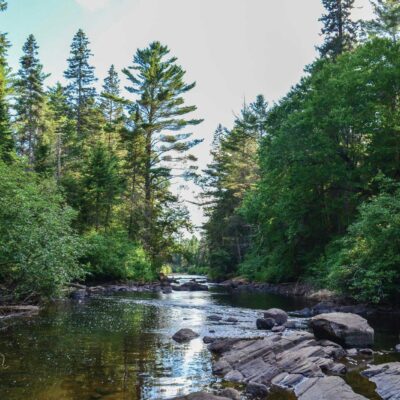
What you see from up here at this time of year is the territory at its fullest. The Mad River runs along the valley floor — slow and warm now compared to April, catching the late light in intermittent glints through the tree cover. The fields between here and Horning’s Mills are every shade of green that June can make: the darker rectangles of hay waiting to be cut, the paler greens of grain just starting to set, the hedgerows and woodlots marking out the old concession patterns that haven’t changed much since this land was surveyed in the 1820s.
The solstice passed a few days ago. There is still light at nine o’clock up here — not quite full light, but that particular northern gloaming where the sky stays luminous while the valley below has already gone to shadow. The limestone at your feet holds the warmth of the day. The air at the edge is cooler by several degrees than it was on the trail behind you.
In the meadow on the shelf above the cliff, the milkweed is opening now. The flower clusters are small and pink-mauve, and they smell faintly sweet in the warm air. The monarchs find this stretch of the Escarpment reliably; they move through in August when the pods are forming. But right now it’s the ox-eye daisies that have run to their full height around the milkweed, and the Queen Anne’s lace just starting at the edges.
People who live within a few kilometres of the Escarpment tend to speak about it the way other people speak about the lake. It’s the fixed reference — you know where north is because you know where the ridge runs. You read the weather by watching how cloud builds or breaks against it. The towns just below — Creemore, Stayner, Mansfield — are shaped by it: sheltered from the worst of the northwest wind in winter, their market gardens and apple orchards sitting in the microclimate the limestone face quietly creates.
From up here, on a clear evening in late June, you can see exactly why people keep coming north to look — and, for some, why looking eventually turns into staying.
There are properties in this territory where this view isn’t a day trip. It’s the thing you see when you open the bedroom curtains, or carry coffee out to the deck, or watch the weather come in from the northwest. Lilactree Farms and Cadmore are two of them — properties with Escarpment views that make this landscape not just something you visit, but something you live inside. If the ridge has stopped you in your tracks before, they’re worth knowing about.
Share
More Posts
Tips, advice, news and more. Scroll through our blogs for interesting reads.
