
The Bobolinks Are Back
There’s a bird that arrives here in the first week of May, every year, after a journey of nearly seven thousand miles from the grasslands of Argentina. It’s smaller than a robin and the male wears what looks like a tuxedo on backwards — black underneath, pale cream on the head and back. He sings from the top of a fence post, or hovering low over the hay, and the song spills out of him in a long, bubbling cascade that has been described, fairly, as the sound of a wind-up toy unspooling itself in mid-air.
This is the bobolink, and the hayfields of these hills are, quite specifically, what he came back for.
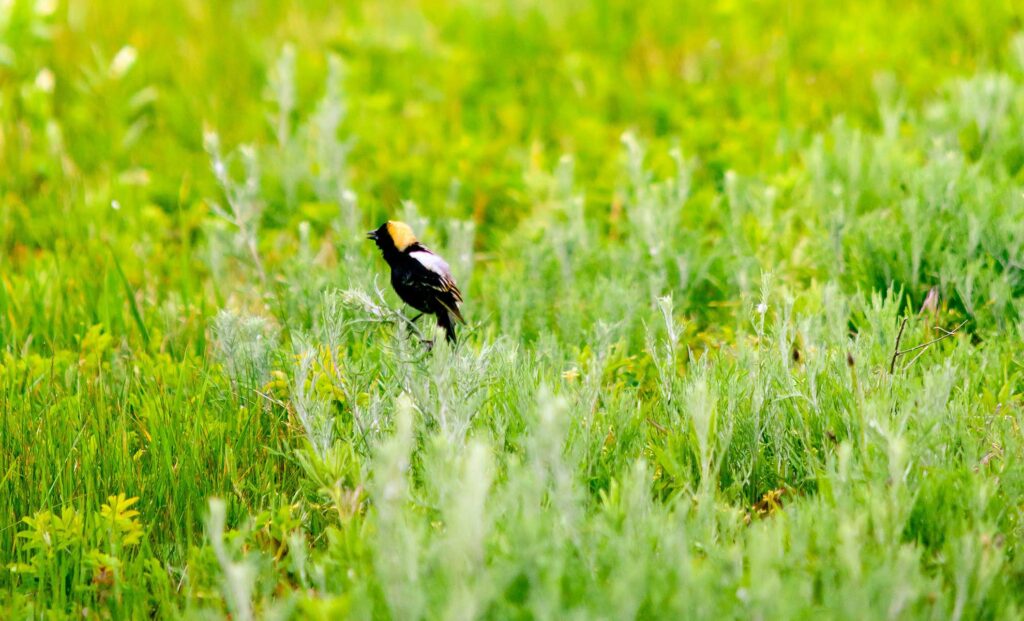
If you’ve driven a concession road in Mulmur or Mansfield this past week with your window down, you’ve heard them — even if you didn’t know what you were hearing.
You hear them best in the early evening, after the wind has dropped. Park anywhere along the 4th Line of Mulmur, or up around the long open stretches near Mansfield where the fields haven’t been tucked into corn yet, and roll the window down. One song first, then another answering from across the field, then four or five at once, going off like distracted bells.
For the people who farm these hills, the bobolink is also a quiet question. The bird nests on the ground, in the hay, and his chicks aren’t ready to fly until late June or early July. The first cut of hay used to come a little later in the season, and the timing held. It’s tighter now. Some farmers around here have started leaving a corner of a field uncut, or holding the first cut a week longer where they can. It’s a small kindness with consequences only the bird notices.
If you’re new to the area, this is one of the things country life will teach you: a hayfield is not just a hayfield. It’s a nursery, a chorus, a piece of the continent that travelled here on its own.
Roll your window down on the way home tonight. They’re singing.
Share
More Posts
Tips, advice, news and more. Scroll through our blogs for interesting reads.
